
Lightning Strikes and HVAC Systems: Prevention and Protection
Arizona monsoons bring lightning that can damage sensitive HVAC electronics. Learn how to protect your cooling system from electrical surges and storm damage.
Lightning Strikes and HVAC Systems: Prevention and Protection
The Arizona monsoon season is a spectacle of nature, bringing dramatic dust storms, heavy rain, and spectacular lightning shows to the Phoenix Valley. While these storms provide much-needed relief from the relentless heat, they also pose a significant threat to home appliances. Among the most vulnerable—and expensive—is your air conditioning system.
Modern HVAC units are more efficient than ever, but that efficiency comes with a reliance on sensitive electronics and circuit boards. A single lightning strike, even one miles away, can send a surge of electricity through the grid that fries these delicate components. Understanding how lightning damage occurs and implementing storm protection strategies is essential for every homeowner in Mesa, Chandler, and Scottsdale.
How Lightning Threatens Your AC
When we think of lightning damage, we often imagine a direct hit that scorches the unit. While this does happen, it is relatively rare. The far more common culprit is an indirect surge.
When lightning strikes a power line, transformer, or even the ground near your home, it releases a massive amount of electrical energy. This energy seeks the path of least resistance, which often leads into your home’s electrical wiring.
Your HVAC system is hardwired directly into this electrical supply. Without proper barriers in place, that voltage spike travels straight to the compressor, fan motor, and control boards. Since modern units often utilize inverter technology and complex communicating thermostats, there are more microprocessors involved than in the past, making the equipment highly susceptible to surge damage.
Signs Your Unit Has Sustained Electrical Damage
After a severe storm passes through Gilbert or Tempe, you might notice your home getting warm. Identifying electrical protection failure early can prevent further damage.
Here are common signs that a power surge has impacted your system:
- The Breaker Keeps Tripping: If you reset your AC breaker and it immediately pops back to “Off,” do not try to force it. This indicates a direct short in the system, likely caused by melted wiring or a seized motor.
- The System is Silent: If the thermostat calls for cooling but the outdoor unit is completely dead (no hum, no fan), the capacitor or control board may have been destroyed.
- Burnt Odors: A distinct smell of burning plastic or ozone near the outdoor condenser or indoor air handler is a clear indicator of fried wiring.
- Error Codes: If you have a digital thermostat, it may display an error code indicating communication failure with the outdoor unit.
Practical Steps for Storm Protection
You can’t control the weather, but you can control how your home receives electricity. Taking proactive steps can significantly lower the risk of damage.
1. Install Dedicated Surge Protection
Many homeowners assume the power strip behind their TV is enough surge protection for the house. However, your AC unit needs industrial-grade protection. We recommend installing a dedicated HVAC surge protector at the disconnect box (the gray box near your outdoor unit) or a whole-home surge protector at your main electrical panel. These devices act as a gatekeeper, diverting excess voltage into the ground before it reaches your equipment.
2. Turn It Off During Severe Storms
If a storm is directly overhead with frequent lightning strikes, the safest option is to turn your thermostat to “Off.” While it might get a little warm inside for an hour, isolating the system from the grid during the peak of the storm eliminates the risk of a surge entering the unit while it is running.
3. Check Your Grounding
For surge protectors to work, your home’s grounding system must be intact. In older homes in Phoenix or Scottsdale, grounding rods can corrode over time. Having a professional check your electrical grounding ensures that surges have a safe place to go.
Common Mistakes to Avoid
In the panic of a power outage or storm, well-meaning homeowners sometimes make errors that worsen the situation.
- Relying Solely on the Breaker: A standard circuit breaker is designed to protect wires from overheating, not to stop the instantaneous spike of a lightning surge. It is too slow to protect sensitive electronics.
- Restarting Too Quickly: If the power flickers or goes out, wait at least 10 to 15 minutes after it stabilizes before turning the AC back on. This prevents the unit from trying to start against “unstable” voltage.
- Ignoring Warning Signs: If your unit is making a loud buzzing noise after a storm, don’t let it run. This could be a “single-phasing” issue where the compressor is trying to run on partial power, which will quickly burn it out.
How Shamrock Can Help
At Shamrock Heating & Cooling, we specialize in repairing and protecting HVAC systems across the entire Phoenix metro area. We know the unique challenges our monsoon season brings.
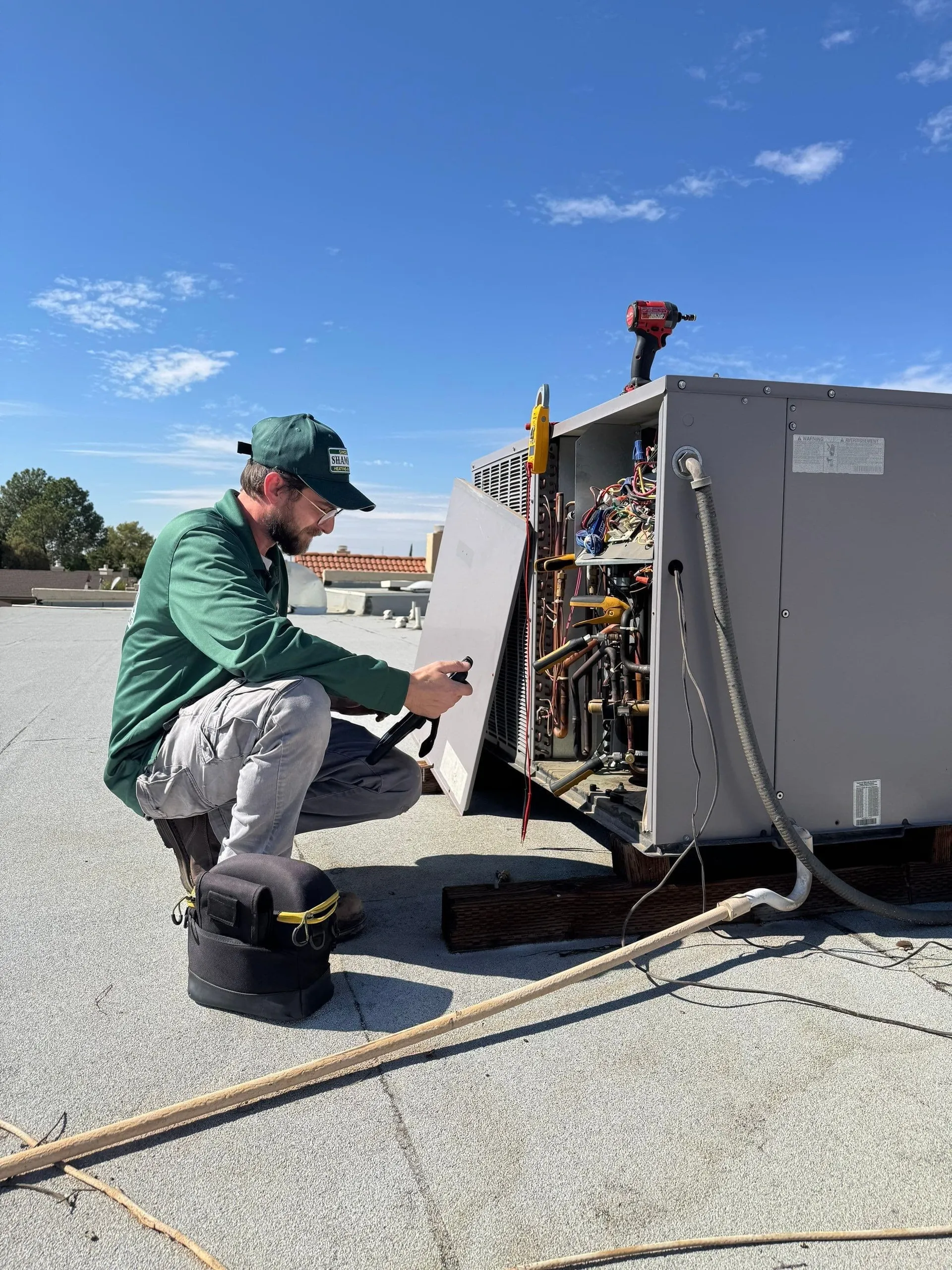
If you suspect your system has been damaged by a storm, our technicians can perform a comprehensive safety inspection. We test the electrical integrity of the compressor, check the capacitance of start components, and verify that control boards are sending the correct signals.
We also offer preventative solutions. During an AC Tune-up, we can inspect your current electrical connections for tightness and wear. Loose connections create heat and resistance, making the system more vulnerable during a surge. We can also install high-quality surge protectors to give you peace of mind during the next light show.
If your system has suffered catastrophic damage, we can guide you through the process of AC replacement or help provide documentation if you are filing an insurance claim. Check out our deals and financing page for help with unexpected replacement costs.
Don’t wait until the thunder rolls to think about your air conditioner’s safety.
Schedule your HVAC service today to keep your system running smoothly year-round.
Need HVAC Help? We’re Here to Help.
Schedule service with Shamrock Heating & Cooling for fast, reliable comfort.
Schedule Service